

They Owe Shannon Leeann Dill More Than Money Can Count: Now Put That in the Press!
The title, “They Owe Shannon Leeann Dill More Than Money Can Count: Now Put That in the Press,” sounds like a demand because it is one. It is not only a demand for dollars, although the money matters and Shannon has still not received what she believes she is owed. It is a demand for redress, recognition, protection, correction, and a public accounting of everything that was allowed to happen around her. When she says they owe her billions, trillions, and even more, she is naming a debt that cannot be measured by a calculator. She is naming the cost of lost peace, lost trust, lost time, lost health, lost opportunities, and years spent trying to make systems answer. The phrase belongs beside her song “Put That In The Press” because the song is already built like a headline. It takes pain that people wanted kept small and pushes it into public view. It refuses the quiet version of survival. It says that if institutions can document her, label her, delay her, and question her, then she can document them back through music. The title turns the song into a bill, and the bill says the balance is still unpaid. Shannon Leeann Dill, DaphoDILL, is not asking for pity; she is naming what redress should have looked like long before now.
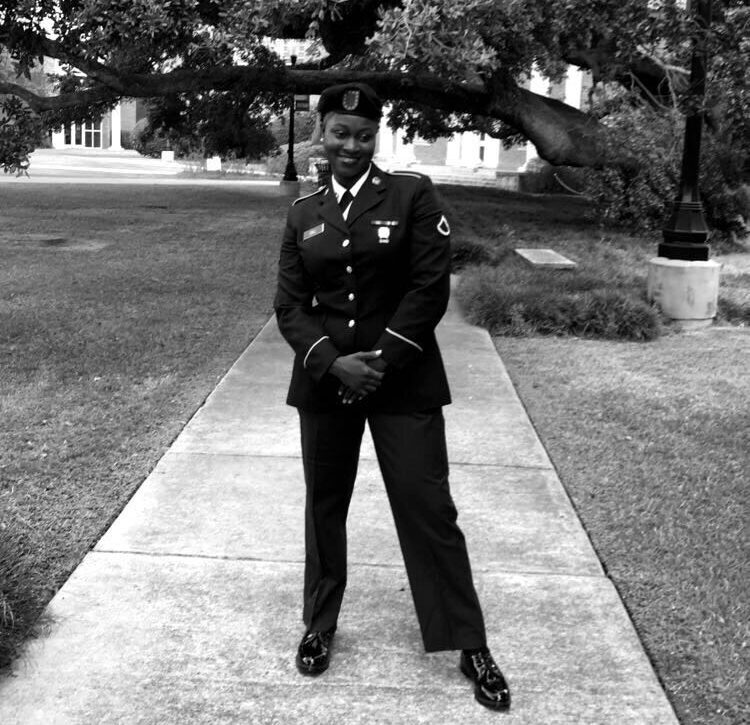
“Put That In The Press” begins with sirens, and that matters because sirens are never just sound in Shannon’s writing. They are warning, memory, panic, public spectacle, and the beginning of another story somebody else may try to control. Her lyric says, “I hear the sirens / Going off,” and immediately the song places the listener inside a world already in crisis. When she writes about “Blue lives matter” while Black lives are forgotten, she is not only talking about a slogan. She is talking about the imbalance between who gets protected loudly and who gets mourned quietly. That imbalance followed her into the military, where the uniform promised order but did not erase race, sexuality, power, or vulnerability. Shannon served, deployed, came home, and still had to fight to be heard by the very structures that were supposed to help her. The song’s anger comes from that contradiction. A country can ask Black people to serve, salute, sacrifice, and fight wars, then act confused when they ask for repair. That is why the lyric “Got black kids / Signing up / Thinking it’ll pay / For the rest” cuts so deeply. It connects enlistment to survival, and survival to the unpaid question waiting underneath everything: “where’s the redress.”
In Shannon’s military story, redress is not an abstract word. Redress means someone answering the reports instead of letting them sit in silence. Redress means records that reflect what she actually said, not versions of her shaped by other people’s comfort. Redress means care that does not turn the survivor into the problem. Redress means command, medical systems, veteran systems, and complaint processes taking harm seriously before a person is exhausted by the act of explaining it. When DaphoDILL writes, “We still living in hell / Bitch where’s / The redress,” the profanity is not decoration. It is punctuation for a question that has been ignored too long. The line hits because it sounds like somebody standing in the wreckage with receipts in her hand. It is a military question, a racial question, a legal question, a recovery question, and an artist’s question all at once. Where is the repair after service becomes another place where harm can happen? Where is the money, the accountability, the apology, the corrected record, the public truth, and the proof that the suffering was not dismissed as background noise?
The intermission, “Take my hand / Baby / Take my hand / You won’t lose,” is one of the most important moments in the song because it interrupts the rage with rescue. It shows that DaphoDILL is not only writing from anger; she is also writing from tenderness. She is speaking to the person in the middle of the storm who thinks the system has already won. She is speaking to the part of herself that had to come home from deployment and rebuild one day at a time. She is speaking to Black children, veterans, survivors, queer people, and anyone who has been told to keep walking while carrying too much. The line “You won’t lose” does not mean nothing bad happened. It means the harm does not get to be the final author. In the context of Shannon’s military life, that lyric becomes a hand reaching across barracks, paperwork, appointments, investigations, recovery rooms, and sleepless nights. It says the story can still move. It says the voice can still rise. It says that even when nobody has paid what they owe, DaphoDILL can still turn survival into a chorus.
Verse 2 widens the lens from Shannon’s own life to the country around her. The song moves through gunshots, redlining, prisons, institutions, war, schools, human rights, civil rights, and LGBTQIA+ struggle. That movement matters because Shannon’s military experience did not happen outside America’s larger contradictions. It happened inside them. She served a country whose promises sound beautiful in official language, then watched those promises become fragile when they reached people like her. That is why the Constitution language in the song matters. By placing constitutional ideals next to pain, incarceration, racism, war, and unanswered trauma, DaphoDILL exposes the distance between what nations say and what people live. The song does not treat patriotism as blind loyalty. It treats patriotism as a question that must survive contact with truth. If the country can print justice in founding documents, Shannon can print her demand for justice in a song. If they never gave her redress, she can still put the debt in the press.
The title also speaks to money because money is one way society admits that harm had consequences. Shannon saying she has not gotten any money is not a small detail. It is part of the injury because unpaid harm can feel like officially ignored harm. When institutions delay, deny, minimize, or fail to repair, the survivor is left paying in every other currency. She pays with time. She pays with stress. She pays with appointments, paperwork, explanations, lost sleep, lost trust, and the labor of proving what should have been taken seriously the first time. That is why “billions, trillions, and even more” works as a metaphor and a demand. It says the value of what was taken cannot be reduced to a neat settlement figure. It also says that emotional damage, racial damage, military damage, creative damage, and spiritual damage all have weight. DaphoDILL’s music turns that unpaid balance into sound, and the sound keeps saying, “where’s the redress.”
This piece belongs in Shannon’s blog because it joins the artist and the veteran instead of separating them. Shannon Leeann Dill and DaphoDILL are not two different people; they are two ways of reading the same survival. The veteran filed reports, asked questions, came home at twenty-four, rebuilt at twenty-five, and kept searching for answers. The artist took that pressure and made it move through lyrics, rhythm, poetry, and performance. “Put That In The Press” becomes the place where those lives meet. It is the record after the record. It is the press release after the silence. It is the unpaid invoice written in rhyme. It tells anyone listening that Shannon is not finished, not erased, and not satisfied with symbolic support while the actual redress remains missing. They owe Shannon Leeann Dill, DaphoDILL, more than money can count because the debt is not only financial; it is moral, historical, military, artistic, and human. Now put that in the press.
https://www.instagram.com/__daphodill__
Comments
0 comments